
New California ADU Regulations for 2026: What Homeowners Need to Know
Accessory Dwelling Units (ADUs) have been transforming the Bay Area housing landscape over the past few years. In 2025, California is introducing new ADU regulations that make it easier for homeowners in Santa Clara County to add extra living space, generate rental income, and increase their property value. Whether you live in San Jose, Santa Clara, Sunnyvale, Milpitas, Cupertino, Mountain View, Los Gatos, or Campbell, understanding these changes is essential if you’re planning to build or invest in an ADU.
1. What’s an ADU and Why They Matter in Santa Clara County
An Accessory Dwelling Unit (ADU) is a secondary housing unit on a single-family lot. It can be:
A detached structure (often called a “granny flat” or guest house)
An attached unit connected to the main home
A junior ADU (JADU), typically ≤ 500 sq ft, converted from existing space
In Santa Clara County, where home prices are among the highest in the nation, ADUs offer several advantages:
Extra rental income: Average rents for a one-bedroom ADU in San Jose or Sunnyvale range from $2,200–$3,000 per month, depending on location and finishes.
Increased property value: Homes with ADUs can sell for $50,000–$150,000 more than comparable properties without ADUs.
Multi-generational living: Perfect for families who want to house adult children or aging parents nearby.
2. Key Changes in 2025 ADU Regulations
The California legislature has introduced several updates to ADU laws, designed to make approval faster, reduce fees, and increase flexibility.
A. Streamlined Permit Approval
Previously, homeowners often faced long delays waiting for city planning approvals. In 2025:
Santa Clara County cities must offer pre-approved ADU designs.
Homeowners can choose a pre-approved plan and receive ministerial approval without discretionary review.
This significantly reduces wait times, sometimes from several months to just weeks.
B. Reduced Fees for Small ADUs
New rules limit impact fees for ADUs ≤ 750 sq ft:
Many cities will eliminate or cap certain fees for small ADUs and JADUs.
Savings can range from $5,000–$20,000, depending on the city.
This is especially helpful in high-cost areas like Cupertino, Mountain View, or Los Gatos.
C. Owner-Occupancy Requirements Relaxed
Previously, some ADUs required the homeowner to live on the property. Now:
Owner-occupancy may be waived in many situations.
This makes ADUs more attractive for investors or homeowners looking to rent out units for income.
D. Multi-Unit Property Flexibility
For multifamily or larger properties:
Santa Clara County regulations allow more than one detached ADU per property in certain cases.
Developers and investors can potentially add up to eight ADUs, depending on lot size and zoning.
3. Local Santa Clara County ADU Requirements
While California provides the baseline rules, each city still has local regulations. Here’s a quick overview:
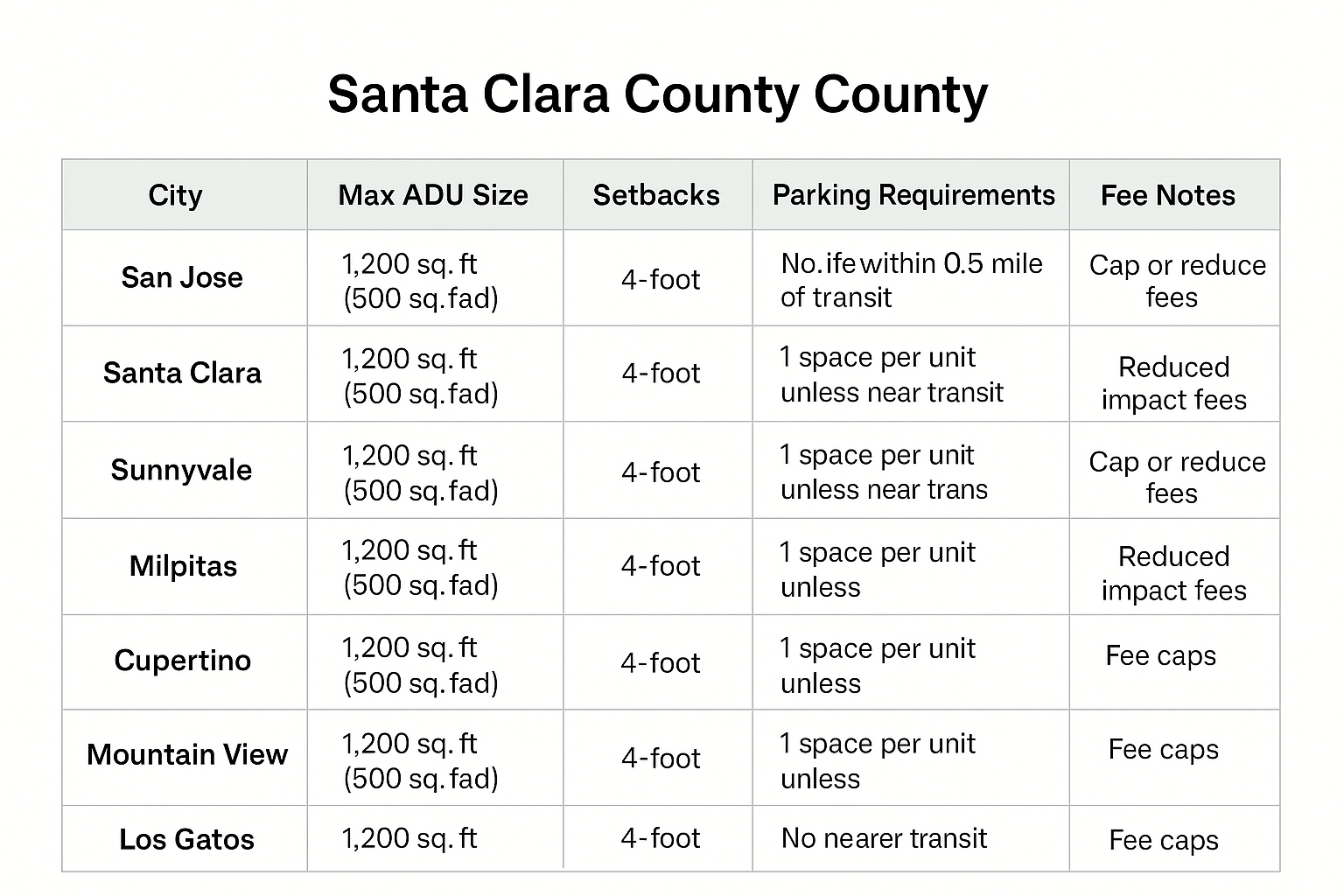
Tip: Even with statewide laws, always check local planning departments. Cities can interpret state rules differently.
4. Benefits for Homeowners in Santa Clara County
A. Faster Approvals, Less Red Tape
Pre-approved designs mean homeowners can break ground sooner, reducing holding costs and accelerating rental income.
B. Lower Costs, Higher ROI
Reduced impact fees + relaxed owner-occupancy requirements = better financial returns.
Example: A 600 sq ft ADU in San Jose could cost ~$120,000 to build. With fee reductions, savings can be $10,000–$15,000, making rental ROI even higher.
C. Investment Potential
ADUs now appeal not only to families but also to real estate investors looking for cash-flowing units in Silicon Valley’s high-demand market.
D. Flexibility for Future Plans
ADUs can serve as guest houses, offices, home gyms, or even student rentals, ideal for multi-generational living or home-office needs.
5. ADU Design & Interior Tips (Optional Value Add)
Open Floor Plans – Small units feel larger with minimal walls.
Efficient Kitchens & Bathrooms – Modern, compact layouts attract renters.
Natural Light – Large windows increase perceived space and rental desirability.
Energy Efficiency – Solar panels, LED lighting, and smart thermostats improve sustainability and appeal.
Separate Entry – Ensures privacy for tenants and homeowners.
These design upgrades can increase rent by 10–15% and make the ADU more marketable.
6. How to Get Started in Santa Clara County
Check local zoning – Every city has its own zoning rules and lot size requirements.
Review pre-approved plans – Most cities provide a library of designs.
Estimate costs and potential income – Factor in reduced fees and construction costs.
Hire a local ADU contractor/designer – Someone familiar with Santa Clara County permitting.
Apply for permits – Submit your chosen design for ministerial approval.
Pro Tip: Working with a Realtor who also understands design can help identify properties with high ADU potential and maximize ROI.
7. Key Takeaways for Santa Clara County Homeowners
ADU laws are more flexible than ever, allowing more units, faster approvals, and lower fees.
Investment opportunity: Renting your ADU can offset mortgage costs or provide long-term income.
Design matters: Small changes can significantly boost rental value.
Local check required: Always confirm specific city requirements — each city may vary slightly despite statewide rules.
If you’re a Santa Clara County homeowner considering an ADU, I can help:
Evaluate your property’s ADU potential
Connect you with pre-approved plans
Contact me today to explore how your property can benefit from the 2025 ADU regulations.
